


Business bookkeeping is the day-to-day practice of recording, organizing, and maintaining every financial transaction your company makes, from sales and expenses to payments and receipts. Done well, business bookkeeping gives small business owners a clear, current view of their money, keeps them ready for tax season, and turns raw numbers into decisions they can make with confidence.
That clarity matters, because many owners start out unsure of their numbers. A 2024 Xero survey found that half of U.S. small business owners have run into financial trouble tied to limited financial literacy, and only 16% work with an accountant or advisor. Strong bookkeeping is how you close that gap.
Key Takeaways
- Business bookkeeping records and organizes every transaction, giving you accurate books, clear cash flow, and a tax-ready paper trail.
- Bookkeeping records the numbers. Accounting interprets them. Most small businesses need solid bookkeeping first and accounting as they grow.
- Two core methods exist: single-entry (simple, one-sided) and double-entry (a debit and a credit for every transaction).
- Choose your accounting basis early: cash basis records money when it moves, accrual records it when earned or owed.
- A full-time bookkeeper averages about $49,000 a year, while part-time or outsourced help often costs far less.
- NOW CFO sets up and runs bookkeeping for growing businesses, so your books stay clean while you focus on growth. Call 801-938-4764.
What Is Business Bookkeeping?
Business bookkeeping is the day-to-day work of recording and organizing every financial transaction your company makes, from sales and expenses to payments and receipts. Bookkeeping sits beneath accounting: it captures the numbers accurately so an accountant can later analyze and report on them. Done consistently, it gives you books you can trust and a clear view of your cash.
What Does Bookkeeping Actually Mean?
Bookkeeping is the systematic process of recording, organizing, and maintaining a business’s financial transactions, so every sale, expense, payment, and receipt is captured accurately. Historically done by hand in journals and ledgers, it’s now usually handled in bookkeeping software that speeds up entry and cuts errors. For startup and small business owners, that accurate record is what makes it possible to manage cash flow and stay ready for tax season.
What Does a Bookkeeper Do?
A bookkeeper keeps your financial records accurate and up to date. Day-to-day, they record transactions, reconcile accounts, organize source documents like invoices and receipts, and keep your books ready for tax time:
- Recording daily transactions accurately.
- Organizing documents like invoices, receipts, and deposit slips.
- Reconciling accounts by comparing financial statements against bank records.
- Maintaining books using software to streamline bookkeeping for SMEs.
- Helping business owners meet tax timelines efficiently.
Key Components of Bookkeeping
An effective bookkeeping system centers on these critical components:
- An organized listing of assets, liabilities, equity, income, and expenses.
- Record transactions chronologically in journals, then post them into ledgers.
- Regularly compare your books against bank statements
- Prepare income statements, balance sheets, and cash flow statements.
Why Does Bookkeeping Matter for Managing Finances?
Bookkeeping matters because it turns scattered financial activity into a clear record you can act on. With current books, you can track income and expenses, catch a cash shortage before it becomes a crisis, and stay ready for tax season.
Moreover, documenting transactions and retaining supporting receipts ensures businesses remain tax-ready and compliant. With real-time insights from organized bookkeeping, owners can easily budget, forecast, and set financial goals.
Why is Bookkeeping Important for Businesses?
Bookkeeping is important because it gives owners the accurate numbers they need to make decisions, meet tax obligations, and keep cash flowing. The need is real: a 2024 Xero survey found half of U.S. small business owners have hit financial trouble tied to limited financial literacy, and only 16% work with an accountant. Good books are the first fix.
Financial Clarity and Decision-Making
Clear books show you exactly where your money comes from and where it goes, so you can decide with facts instead of guesses. Owners use that visibility to compare results against budget, watch profit margins, and fix small problems before they grow.
Through disciplined bookkeeping, small businesses gain a clear view of profit margins, cost centers, and revenue streams. Moreover, bookkeeping equips owners to compare actual performance against budgets, identify trends, and make timely decisions.
Tax Compliance and Reporting
Accurate bookkeeping keeps your business compliant and helps you avoid tax penalties. When receipts, invoices, and transactions are recorded consistently, filing is faster, errors drop, and you have a clean trail if the IRS ever asks.
Moreover, accurate bookkeeping simplifies tax filing by consolidating receipts, invoices, and transaction records. It reduces errors, helps business owners avoid risk, stay compliant, and focus on growth.
Tracking Business Performance
Bookkeeping lets you measure how the business is actually performing over time. Consistent records reveal which products or customers drive revenue, where costs are creeping up, and how profit is trending:
- Tracks income streams by product, service, or customer segment.
- Reveals fixed, variable, or recurring cost patterns.
- Owners can quickly identify gaps and adjust strategies.
- Helps determine gross and net profit over time.
- Uncovers fluctuations in cash inflow and outflow.
- Business owners use financial data to plan expansions, hire staff, or adjust pricing.
Improving Cash Flow Management
Bookkeeping improves cash flow by showing you money in and money out as it happens. That daily view helps you catch slow-paying customers, time your bill payments, and forecast whether you’ll have enough cash next month.
Accurate financial record‑keeping helps identify receivables delays or unexpected outflows. Through organized tracking, owners synchronize invoicing, bill payments, and collections.
Moreover, detailed cash flow data enables forecasting, helping owners plan for expansion or investment. Clear visibility into cash health strengthens credibility with suppliers or lenders, improving terms or securing funding when needed
Learn More: Cashflow management with an outsourced CFO
Ensuring Financial Accountability
Well-kept books make your business accountable to the people who rely on its numbers. Every entry ties back to a source document, so investors, lenders, and auditors can trust what they see:
- Every entry is backed by source documents, ensuring every receipt or expense is traceable.
- Investors, lenders, and auditors rely on clean books to evaluate performance and gauge financial health.
- Well-organized records reduce delays or penalties during audits.
Bookkeeping vs Accounting: What’s the Difference?
Bookkeeping and accounting are related but different jobs: bookkeeping records your financial activity, and accounting interprets it. Knowing where one ends and the other begins helps you buy the right help at the right time.
Key Differences Between Bookkeeping and Accounting
The clearest way to see the difference is side by side. Bookkeeping handles recording and organizing; accounting handles analysis and strategy. The table below compares them on purpose, tasks, output, and timing.
| Aspect | Bookkeeping | Accounting |
|---|---|---|
| Purpose | Records and organizes daily transactions | Interprets and reports on those records |
| Main tasks | Data entry, reconciliation, invoicing, payroll entries | Analysis, tax strategy, forecasting, advisory |
| Output | Organized books and source records | Financial statements, insights, and strategy |
| When you need it | From day one, as transactions happen | As complexity grows and decisions get bigger |
How Bookkeeping and Accounting Work Together
Bookkeeping and accounting work in sequence. Bookkeeping captures accurate transactions first; then accounting analyzes those records to build budgets, forecasts, and the reports that guide bigger decisions.
Once accurate records exist, accountants interpret data, analyze it, and prepare strategic reports. Eventually, they turn raw numbers into actionable budgeting, forecasting, and performance tracking insights.
When to Use Bookkeeping vs Accounting Services
Which one you lean on depends on your size, transaction volume, and how complex your decisions have become. As a rule, bookkeeping covers day-to-day recording, while accounting steps in for analysis and compliance:
| Scenario | Use Bookkeeping | Use Accounting |
|---|---|---|
| Transaction volume & revenue | Fewer transactions each month | Volume and complexity are rising |
| Growth stage & complexity | Recording, invoicing, and reconciling | Analysis, compliance, and advisory |
Which Does Your Business Need?
You need a bookkeeper if your work is mostly recording transactions, invoicing, and reconciling, and you want accurate books at a manageable cost. You need an accountant once you require forecasting, tax strategy, or performance analysis to guide growth.
You’ll benefit from an accountant when your business reaches higher operational complexity, demanding forecasting, tax compliance, performance analysis, or planning. An accountant steps in to interpret data, align tax strategy, and guide growth decisions.
What Are the Main Types of Bookkeeping Systems?
Bookkeeping systems fall into a few types that differ in how much detail and control they give you. The main choices are single-entry versus double-entry, and manual versus digital. The right fit depends on your size, complexity, and where you’re headed.
Single-Entry Bookkeeping
Single-entry bookkeeping records just one side of each transaction, usually income or expense, in a simple running log. It’s the easiest method to keep and can work for a very small venture, but it has no built-in error check and gets unreliable as finances grow.
A single-entry bookkeeping system is the simplest to maintain and can be practical for entrepreneurs launching a small venture. However, it lacks built‑in checks for errors and is less reliable when financial control and accuracy become vital.
Double-Entry Bookkeeping
Double-entry bookkeeping records every transaction in at least two accounts, one debit and one credit, so the books always stay in balance. It gives a complete picture of assets, liabilities, equity, income, and expenses, which is why most growing businesses rely on it.
Moreover, it provides a complete picture of your finances by capturing changes in assets, liabilities, equity, income, and expenses. Simultaneously, it reinforces strong financial record‑keeping and supports strategic cash flow management and tax preparation.
Manual vs Digital Bookkeeping
The difference between manual and digital bookkeeping comes down to doing it by hand versus letting software do the heavy lifting. Manual works for very simple books; digital scales and cuts errors. Here’s how they compare:
| Manual Bookkeeping | Digital Bookkeeping |
|---|---|
| Relies on handwritten ledgers | Uses software and cloud tools |
| Prone to human error, slow reconciliations, and a limited audit trail | Automates calculations, reduces mistakes, and keeps cleaner records |
| Basic tracking with little forecasting insight | Real-time insights, forecasting, and budgeting support |
Cloud-Based Bookkeeping Systems
Cloud-based bookkeeping keeps your books online, so you and your team can reach up-to-date records from anywhere. These tools sync with your bank, automate invoicing and reconciliation, and refresh your reports in real time.
Cloud systems allow real-time collaboration, automatic updates, and streamlined tax preparation. These platforms often include automated invoicing, reconciliation, and reporting, supporting better cash flow management.
Cash Basis vs Accrual Basis Accounting
Before you record a single transaction, decide how you’ll recognize income and expenses. This one choice shapes your books, your taxes, and how clearly you see cash flow.
Cash basis records income when the money lands in your account and expenses when you pay them. It’s simple, and it works well for many small businesses that deal mostly in immediate payments.
Accrual basis records income when you earn it and expenses when you incur them, even if the cash moves later. It gives a more accurate picture for businesses that carry inventory, invoice clients, or work on longer payment terms.
Most small businesses start on a cash basis, but confirm the right method with your accountant, since your size, industry, and tax situation all play a part.
What Are the Essential Bookkeeping Tasks?
A handful of tasks make up the core of bookkeeping, and doing them consistently is what keeps your records reliable. The essentials: recording transactions, reconciling accounts, managing payables and receivables, tracking income and expenses, and preparing financial statements.
Recording Daily Transactions
Recording daily transactions means logging every sale, payment, receipt, and purchase as it happens. Entering them promptly prevents gaps in your ledger and makes sure every deductible expense and source of income is documented for tax time.
By entering every sale, payment, receipt, and purchase as they happen, you prevent data gaps and maintain a reliable ledger. This practice supports tax preparation by ensuring that every deductible expense and every source of income is documented.
Reconciling Bank Statements
Reconciling bank statements means matching your books against your actual bank balance to catch anything that doesn’t line up. It surfaces bank fees, deposits in transit, and uncleared checks before they distort your records or your cash picture.
Regular reconciliation strengthens cash flow management by catching differences before they become bigger issues. It also streamlines tax preparation by creating a clear and reliable audit trail.
Managing Accounts Payable and Receivable
Managing accounts payable (what you owe) and accounts receivable (what you’re owed) keeps your cash cycle healthy. Stay on top of both, and you avoid late fees, get paid faster, and can forecast cash more accurately:
To manage AP/AR efficiently:
- Schedule vendor payments strategically to maintain strong supplier relationships and avoid late fees.
- Issue invoices promptly, follow up on overdue payments, and maintain clean financial record‑keeping.
- Monitor outstanding receivables and apply collection strategies.
- Adopt digital tools to streamline payables and receivables, reducing manual transactions and lag time.
- Track payables and receivables on time to inform cash flow forecasting, allowing you to plan purchases, investments, and growth.
Tracking Expenses and Income
Tracking every dollar spent and earned tells you whether the business is actually profitable. Categorize expenses and record income as it comes in, and you can control costs, see your margins, and decide on real figures.
Accurate tracking allows you to categorize expenses and monitor income from sales or services. Recording income and expenses promptly ensures cash flow management stays proactive.
Preparing Financial Statements
Financial statements turn your bookkeeping into a clear read on the business. The three core reports, the income statement, balance sheet, and cash flow statement, show profitability, what you own and owe, and how cash moves:
- Creates Critical Reports: You produce the income, balance, and cash flow statements. Well‑organized records help small businesses to gain a deeper understanding of business progress and profitability.
- Loan and Investment: Lenders, investors, and potential partners depend on formal financial statements. A balance sheet helps track assets, liabilities, and equity.
- Enables Financial Analysis: With detailed statements, businesses compare performance period-to-period, flag trends, and spot anomalies.
- Strengthens Tax Preparation: Financial statements streamline tax preparation by summarizing income and deductible expenses, simplifying filings, and reducing audit exposure.
- Establishes Accountability and Strategy: You maintain accountability to stakeholders and sustain operational transparency.
How to Set Up Bookkeeping for Your Business
Getting business bookkeeping right from day one saves you from expensive cleanup later. A few steps build the foundation:
- Open a dedicated business bank account and card. Keeping business and personal money separate protects both your records and your legal standing.
- Choose your accounting method, cash or accrual, before you record anything.
- Set up a chart of accounts: a simple, organized list of every category your money flows through, including assets, liabilities, equity, income, and expenses.
- Pick bookkeeping software that fits your size and connects to your bank so transactions import automatically.
- Set a routine. A short weekly session to record transactions and file receipts keeps your books current and the stress low.
Bookkeeping Best Practices for Business Owners
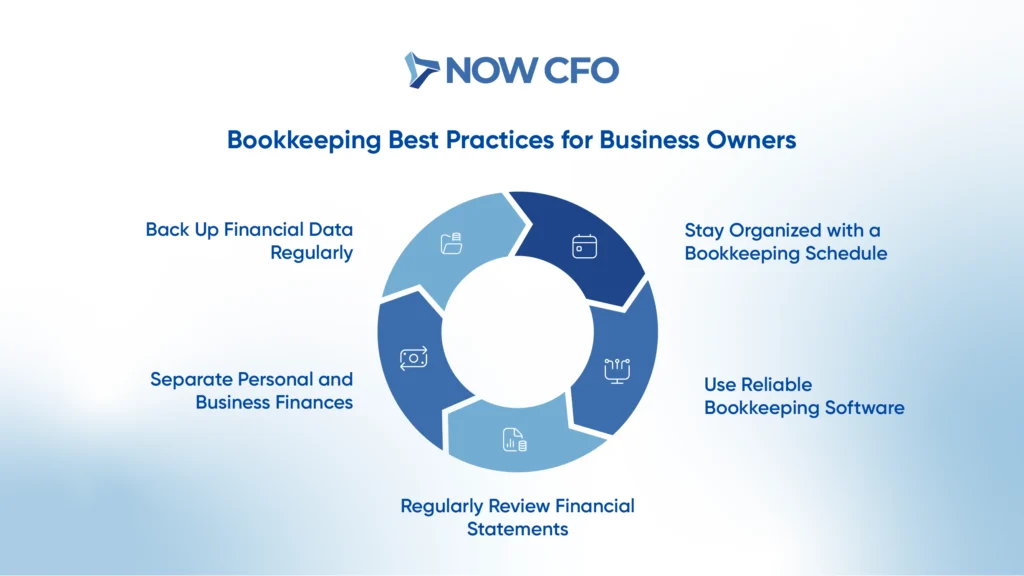
A few habits keep your books accurate without eating your week. The ones that matter most: set a regular schedule, use reliable software, review your statements, keep business and personal money separate, and back up your data.
Stay Organized with a Bookkeeping Schedule
Setting a fixed bookkeeping schedule is the simplest way to keep records accurate and current. A short daily or weekly routine, updating transactions and filing receipts, prevents the backlog that causes errors and tax-time scrambles.
Daily or weekly bookkeeping routines strengthen cash flow management and improve tax readiness by avoiding overlooked entries or missing receipts. A daily accounting checklist simplifies responsibilities like updating transactions and reconciling accounts, and keeps financial records meticulously maintained.
Use Reliable Bookkeeping Software
Good bookkeeping software automates the repetitive work, so your records stay clean with less effort. It handles data entry, categorization, and reconciliation, and gives you dashboards that update as transactions come in:
- Software handles data entry, categorization, and reconciliation.
- Automating calculations and report generation ensures cleaner records, strengthens defenses during tax preparation, and supports clear audit trails.
- You’ll better understand cash flow management with dashboards and reports that update instantly.
- Cloud-enabled tools allow access from anywhere.
Regularly Review Financial Statements
Reviewing your financial statements on a set schedule is how you catch problems early. Read your income statement, balance sheet, and cash flow report monthly or quarterly to spot revenue dips, rising costs, or tightening cash before they hurt:
- Analyze income statements, balance sheets, and cash flow reports to assess performance.
- Review statements monthly or quarterly to detect revenue dips, rising expenses, or tightening liquidity early.
- Consistent statement reviews build credibility with investors, lenders, or partners.
Separate Personal and Business Finances
Keeping business and personal money in separate accounts protects both your records and your legal standing. Mixing the two blurs expense tracking, complicates taxes, and can put your liability protection at risk.
Back Up Financial Data Regularly
Backing up your financial data consistently safeguards accurate financial record‑keeping and protects against data loss from hardware failure, human error, or cyber threats.
Secure, routine backups create a reliable recovery point for business-critical files such as ledgers, receipts, payroll records, and transaction logs. When disaster strikes, thorough backups save you from manually reconstructing records, preserving accuracy and compliance continuity.
How to Choose the Right Bookkeeping Solution
Choosing a bookkeeping solution comes down to matching the option to your size, stage, and budget. Your main choices are doing it yourself, hiring in-house, or outsourcing, and the right pick usually changes as the business grows.
In-House vs Outsourced Bookkeeping
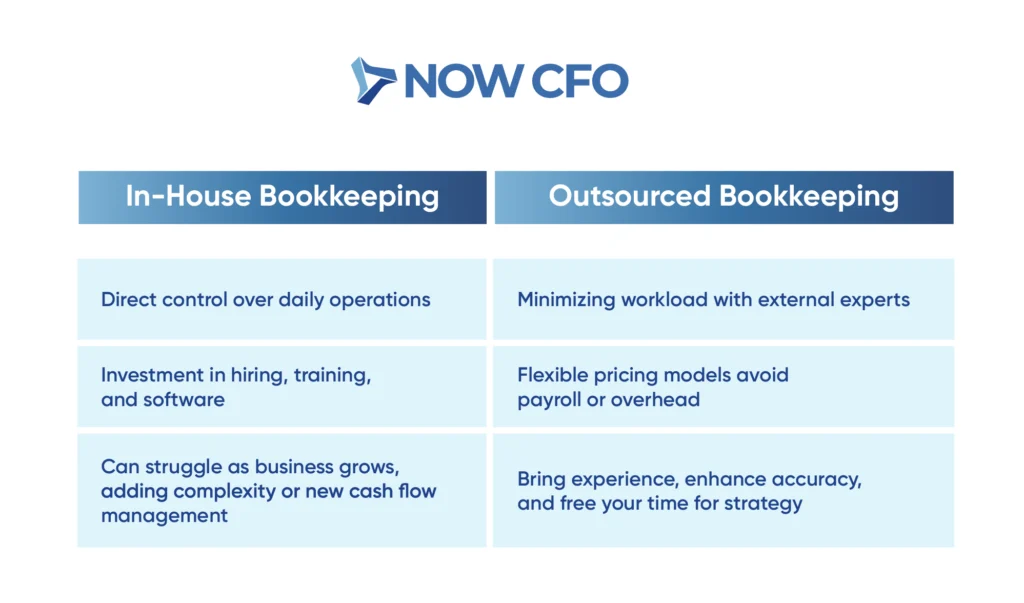
Choosing between in-house and outsourced bookkeeping involves balancing control, cost, and scalability.
Top Bookkeeping Software Options
You want software that streamlines financial record‑keeping and enhances bookkeeping best practices. Here are proven, widely-recommended options favored by small business owners:
- QuickBooks Online
- Xero
- Zoho Books
- FreshBooks
- Sage Business Cloud Accounting
- Wave Accounting
Factors to Consider When Choosing a Bookkeeping Service
When selecting a bookkeeping service, weighing several key factors is essential.
- Choose a service provider with proven experience in your sector.
- Evaluate whether the provider covers daily transaction processing, reconciliation, financial reporting, and other services.
- Look for a service that uses bookkeeping software that is compatible with your existing systems.
- Avoid service providers with hidden fees and confirm whether billing is monthly, per transaction, or per service bundle.
- Your provider should offer timely responses, regular updates, and accessible support.
Cost of Bookkeeping Solutions
Knowing the cost of bookkeeping solutions will help you plan budgets and achieve long-term financial clarity. Here’s a breakdown of typical cost structures:
- Monthly Packages: Many SMEs pay a flat monthly fee for comprehensive services.
- Percentage of Revenue: Certain providers charge based on revenue; typically 1% to 3%, aligning their compensation with your business success.
- Part-Time or Hourly Rates: Freelance or part-time bookkeepers often charge $21–23 per hour.
- In‑House Bookkeeper Cost: Hiring a full-time bookkeeper involves salary and benefits. The average annual salary of a bookkeeper is approximately $50,000.
Scalability for Growing Businesses
Enforcing accurate bookkeeping requires systems that scale seamlessly while preserving financial record‑keeping accuracy and efficiency as your business expands. Flexible solutions allow you to sustain growth without revising your entire bookkeeping process.
Scalable bookkeeping tools offer unmatched growth support. In the US, over 75% of SMEs have adopted cloud accounting. These platforms handle increasing transactions, multi-user access, and complex workflows.
Common Bookkeeping Mistakes to Avoid
Minor missteps in bookkeeping can have lasting consequences. By recognizing the common mistakes, you can take preventive steps to strengthen your bookkeeping practices.
Mixing Personal and Business Finances
One of the most pervasive and harmful mistakes in bookkeeping is commingling personal and business finances. Doing so compromises financial record‑keeping, inflates tax liabilities, and jeopardizes legal protections.
Besides, many SME owners mix personal and business expenses on their business cards. This seemingly minor action complicates bookkeeping, blurs expense tracking, and hinders accurate tax preparation.
Neglecting to Reconcile Accounts
Neglecting to reconcile accounts poses a serious risk because it weakens your financial record-keeping and can create hidden cash flow problems. When you skip regular reconciliation, you miss discrepancies like unrecorded bank fees, deposits in transit, or unauthorized withdrawals.
By reconciling monthly or weekly, you promote disciplined bookkeeping, prepare accurate statements for tax preparation, and ensure your financial foundation stays trustworthy.
Failing to Back Up Financial Data
Neglecting to back up your financial information puts your business at serious risk. Without reliable backups, even a single disruption can lead to irretrievable data loss, costly downtime, and regulatory headaches.
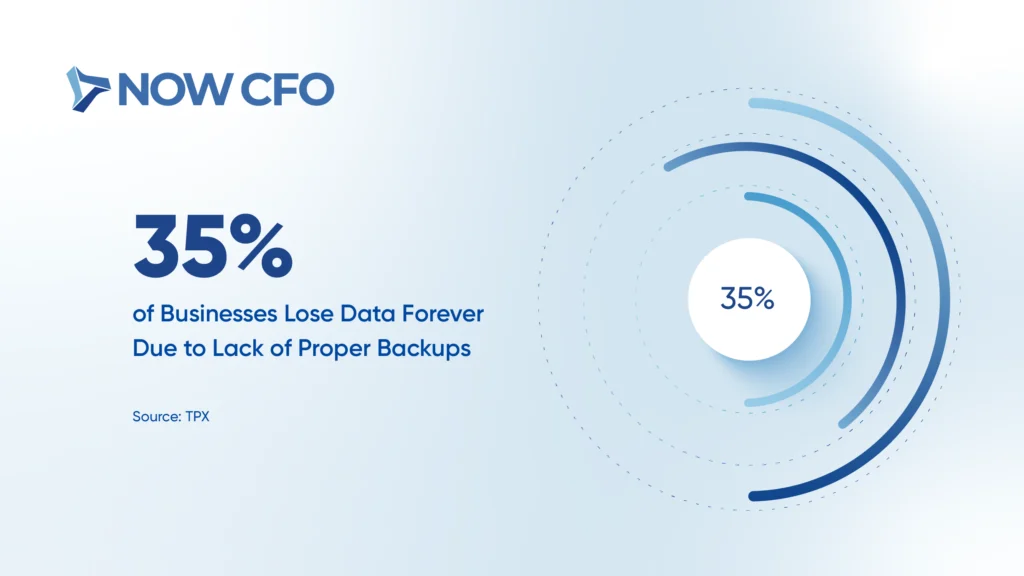
Nearly 35% of businesses face data losses and can’t recover their data because they lack proper backups. Even minor failures can disrupt your bookkeeping, making data loss highly probable.
Ignoring Small Transactions
Overlooking small transactions can quietly derail your bookkeeping. While they may seem insignificant, these entries impact your financial record‑keeping accuracy and obscure cash flow visibility.
Ignoring small transactions disrupts the completeness of your records, diminishes data integrity, and undermines bookkeeping best practices. Without tracking minor costs, businesses can miss cumulative expense leaks that negatively affect profitability.
Overlooking Tax Deadlines
Failing to meet tax deadlines threatens the bookkeeping and exposes your business to financial record‑keeping risks.
Here’s why staying on top of deadlines matters:
- Monthly Penalties: Missing a tax filing deadline triggers a 0.5 % penalty on the unpaid tax per month (up to a maximum of 25%).
- Liability Across Tax Types: Quarterly estimated tax payments and employment or sales tax filings also carry penalties and interest if missed.
- Increased Audit Risk & Administrative Burden: Repeated missed deadlines can attract IRS attention, draw scrutiny, and increase compliance burdens.
Turning Bookkeeping Into a Growth Tool
The basics of business bookkeeping are the backbone for sustainable financial health. When done right, bookkeeping keeps your records accurate, your cash flow steady, and your business prepared for tax obligations. More importantly, it transforms your financial data into a tool for intelligent decisions.
NOW CFO specializes in helping businesses like yours establish strong bookkeeping practices. Take the next step: Reach out for a no-pressure, free consultation and connect with one of our experts. By partnering with experienced professionals, you ensure that your bookkeeping is not just a requirement but a strategy for long-term success.
Frequently Asked
Disclaimer: This content is for general information only and isn’t a substitute for professional accounting, tax, or financial advice. For guidance specific to your business, contact NOW CFO


