
The Ultimate Guide to Fractional CFO Services
A fractional CFO is a seasoned financial professional who provides part-time or project-based services to multiple organizations. From 2019 to 2020, there was a 27% increase in CFO resignations, leading to a rise in demand for part-time financial leadership.
Engaging a part-time CFO can offer numerous advantages, including strategic financial planning, improved cash flow management, and enhanced decision-making processes. By leveraging their expertise, businesses can navigate financial complexities, ensure compliance, and position themselves for long-term success.
Introduction to Fractional CFO Services
Not all organizations require or can afford full-time CFOs. Outsourced CFO services offer flexible and cost-effective financial leadership solutions.
Definition and Overview of Fractional CFO Services
A fractional CFO is a financial expert who provides CFO-level services on a part-time, contractual, or project basis. Unlike traditional full-time CFOs, fractional CFOs work with multiple organizations, delivering strategic financial guidance without the commitment of a permanent position.
This arrangement allows businesses to access high-level expertise tailored to their needs and budget constraints. For instance, an interim CFO might assist with financial planning, budgeting, and cash flow management, ensuring the company’s financial health aligns with its growth objectives.
Learn More: What is a fractional CFO?
How Fractional CFO Services Differ from Traditional CFO Roles
While fractional and traditional CFOs aim to steer a company’s financial direction, their roles differ significantly in engagement and scope.
Here’s a table comparing fractional CFO services with traditional CFO roles based on key aspects:
This structured comparison highlights how fractional CFO services provide flexibility and cost-effective CFO solutions while traditional CFOs offer deep organizational integration.
| Aspect | Fractional CFO | Traditional CFO |
|---|---|---|
| Engagement Type | Part-time or project-based | Full-time executive |
| Scope of Work | Flexible, based on specific needs | Embedded in daily operations and long-term planning |
| Cost Structure | Lower cost, pay-as-needed basis | Higher costs include salary, benefits, and bonuses |
| Industry Experience | Works across multiple industries, bringing diverse insights | Deep expertise in one company’s financial scenario |
| Strategic Involvement | Provides high-level financial guidance when required | Continuously involved in strategy and execution |
| Integration | Works externally but collaborates with internal teams | Fully integrated into company culture and decision-making |
| Best for | SMEs, startups, and companies needing flexible financial leadership | Larger corporations with complex financial structures need full-time oversight |
Core Responsibilities of a Fractional CFO
The responsibilities of an outsourced CFO encompass a wide range of financial management tasks, including:
- Financial Planning and Analysis: Developing long-term financial strategies and conducting profitability analyses.
- Budgeting and Forecasting: Creating and managing budgets and forecasting future financial performance.
- Cash Flow Management: Monitoring and optimizing cash flow to ensure liquidity.
- Risk Management: Identifying financial risks and implementing mitigation strategies.
- Stakeholder Communication: Presenting financial reports and insights to stakeholders and advising on economic decisions.
Overview of Key Benefits and Challenges
There are several benefits of fractional CFO services. Some of them are:
- Cost Savings: Access top-tier financial expertise without the expense of a full-time salary and benefits.
- Flexibility: Scale services up or down based on business needs and financial complexities.
- Diverse Expertise: Benefit from the fractional CFO’s varied experience across different sectors and business models.
The Benefits of Hiring a Fractional CFO for Your Business
Now, let’s look into the benefits of hiring fractional CFOs.
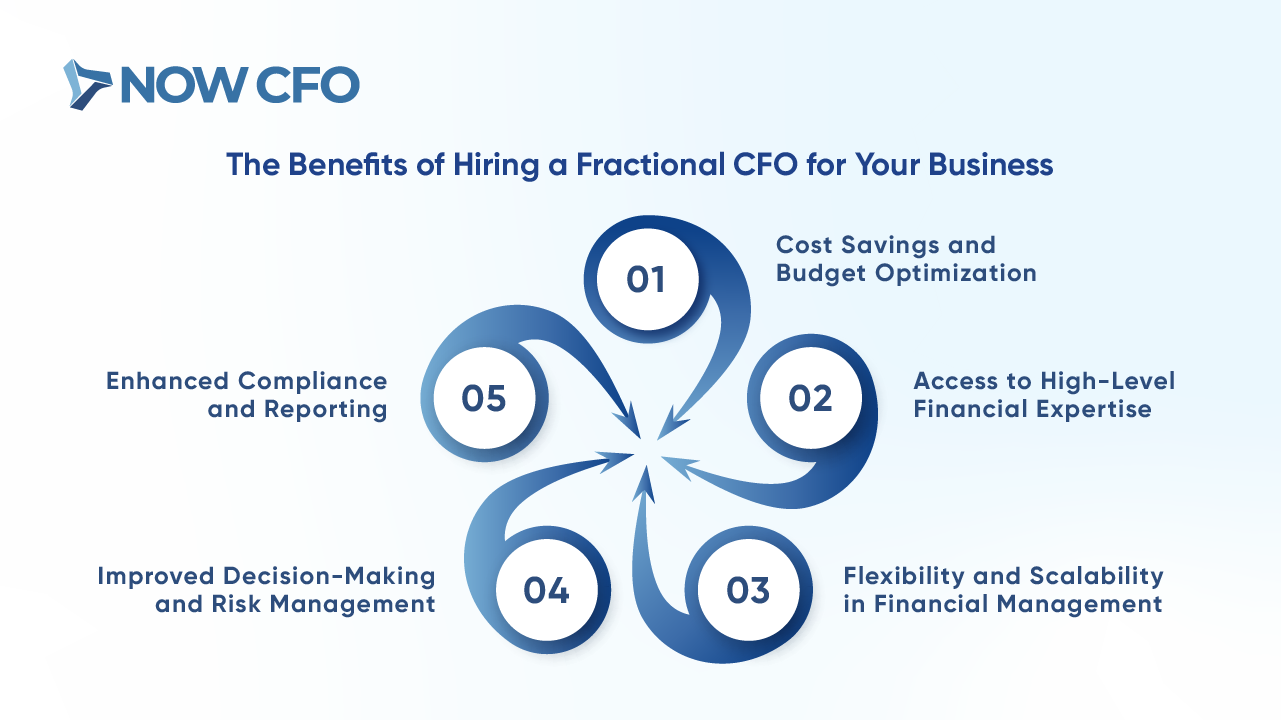
Cost Savings and Budget Optimization
Engaging a fractional CFO allows businesses to access top-tier financial expertise without the expense of a full-time salary and benefits. Companies can allocate resources more efficiently by paying only for the services needed.
For instance, instead of committing to a six-figure salary, a business might contract a fractional CFO part-time, significantly reducing overhead costs. This approach enables firms to invest savings in other critical areas such as research and development, marketing, or technology upgrades.
Access to High-Level Financial Expertise
A fractional CFO brings a wealth of experience from various industries, providing businesses with high-level financial expertise that might otherwise be inaccessible. These professionals offer strategic insights into financial planning, risk management, and growth strategies.
Their diverse backgrounds enable them to implement the best practices and innovative solutions tailored to the company’s unique challenges. For example, a fractional CFO can assist in navigating complex financial regulations, optimizing tax strategies, or preparing for mergers and acquisitions.
Flexibility and Scalability in Financial Management
The dynamic nature of business often requires adaptable financial strategies. The flexibility fractional CFOs offer are:
- Adaptive Financial Strategies: Services scale based on a company’s needs, whether during growth, market downturns, or specific projects.
- On-Demand Expertise: Businesses can adjust a fractional CFO’s hours based on workload and financial requirements.
- Scalable Support: Ideal for companies experiencing expansion, product launches, or restructuring.
Improved Decision-Making and Risk Management
Effective financial leadership directly impacts a company’s decision-making processes and risk management capabilities.
- Data-Driven Insights: Fractional CFOs provide accurate financial reporting and forecasting.
- Proactive Risk Mitigation: Identifies financial risks early and develops strategies to prevent crises.
- Cash Flow Optimization: Forecasts potential shortfalls and recommends proactive liquidity measures.
- Business Growth Positioning: Ensures financial stability while enabling the company to seize new opportunities.
Enhanced Compliance and Reporting
Most businesses find dealing with financial regulations daunting. Fractional CFOs ensure that companies comply with all relevant laws and standards, reducing the risk of legal issues and monetary penalties.
They oversee accurate and timely financial reporting, essential for maintaining stakeholder transparency and building investor confidence. For instance, a fractional CFO will stay abreast of changes in tax laws and ensure that the company’s financial practices adapt accordingly.
Fractional CFO vs. Full-Time CFO: Pros, Cons, and Key Differences
Understanding the distinctions between these roles is crucial for making an informed choice that aligns with your organization’s needs and resources.
Cost Comparison and Budget Impact
Engaging a full-time CFO entails a significant financial commitment. As of February 2025, the average annual salary for a full-time CFO in the US is approximately $457,885, with total compensation.
In contrast, fractional CFO services offer a more budget-friendly alternative. These professionals’ media salaries range from $101,000 to $180,000 annually.
Flexibility and Responsiveness
Fractional CFOs provide unparalleled flexibility, allowing businesses to scale services based on current needs. Whether your company requires strategic financial planning during growth or temporary oversight during transitional periods, fractional CFOs can adjust their involvement accordingly.
This adaptability ensures you receive expert financial guidance precisely when needed without a long-term commitment. Conversely, a full-time CFO offers consistent availability and may be more deeply integrated into daily operations.
Depth of Expertise Versus Continuity
Fractional CFOs often bring diverse experiences from working with multiple industries and companies.
- External Objectivity: A fractional CFO provides unbiased financial insights, evaluating business strategies from a fresh perspective.
- Defined Roles Required: Clear expectations and structured communication help integrate them into the team effectively.
- Deeper Cultural Alignment: A full-time CFO influences and strengthens the company’s financial culture over time.
- Stronger Internal Team Development: Their permanent presence fosters leadership growth within the finance department.
Organizational Integration and Cultural Fit
Integrating a fractional CFO into your team requires clear communication and defined roles. Their part-time involvement means they may not be as immersed in the company culture as a full-time CFO. However, their external perspective can provide unbiased insights and objective assessments of your financial practices.
A full-time CFO, being a permanent team member, is more likely to align closely with the company’s ethos and can influence and shape the financial culture over time. This deep integration can benefit long-term strategic initiatives and foster internal talent development.
Strategic Alignment and Decision-Making
Both fractional and full-time CFOs play pivotal roles in strategic planning and decision-making. A fractional CFO can offer high-level strategic insights, especially valuable during specific projects or financial restructuring. Their varied experience allows them to apply best practices from different sectors to your business challenges.
However, their part-time status might limit their involvement in day-to-day decision-making processes. In contrast, a full-time CFO is continuously engaged with all aspects of the company’s operations, enabling them to make informed decisions swiftly.
Learn More: Fractional CFO vs Full-Time CFO
How to Choose the Right Fractional CFO for Your Organization
Selecting the appropriate fractional CFO is a pivotal decision that can significantly influence your organization’s financial health and strategic direction. To ensure a successful partnership, it’s essential to assess various factors meticulously.
Evaluating Experience and Industry Expertise
Examine the candidate’s professional background and familiarity with your industry. A fractional CFO with relevant experience can offer tailored insights and strategies that align with your business environment.
For instance, if your company operates within the technology sector, a CFO who has previously managed finances for tech firms will understand the unique challenges and opportunities in that field.
Defining Your Business Needs and Objectives
Before initiating the selection process, clearly outline your organization’s financial goals and the responsibilities you expect the fractional CFO to undertake. Determine whether your primary focus is fundraising, cash flow management, strategic financial planning, or another area.
A well-defined set of objectives streamlines the selection process and ensures that the chosen professional’s expertise aligns with your company’s needs. This clarity fosters a productive partnership, as both parties have a mutual understanding of expectations and desired outcomes.
Key Questions to Ask Prospective Fractional CFOs
Engaging in a comprehensive interview process is crucial to gauging the suitability of potential candidates. Consider posing the following questions:
- What experience do you have with companies at our stage of growth
- Can you provide examples of how you’ve assisted businesses in achieving their financial objectives?
- How do you approach financial forecasting and budgeting?
- What tools and systems do you utilize for financial management?
Assessing Compatibility with Your Financial Team
The fractional CFO will collaborate closely with your existing financial personnel; therefore, compatibility is essential. Assess their communication style, leadership approach, and ability to integrate seamlessly into your team dynamics.
A harmonious working relationship fosters a cohesive environment, enhancing productivity and morale. It’s beneficial to involve key team members in the interview process to ensure that the prospective CFO’s style aligns with the team’s workflow and corporate culture.
Reviewing Track Record and Client Testimonials
Investigate the candidate’s professional history by reviewing case studies, client testimonials, and references. A proven track record of delivering measurable financial improvements and strategic successes in similar industries strongly indicates their potential value to your organization.
Additionally, consider reaching out to past clients to gain firsthand insights into their experiences, which can provide a more comprehensive understanding of the CFO’s capabilities and work ethic.
Cost Analysis: Fractional CFO Services vs. Traditional CFO Hiring
Understanding the cost implications of each option is crucial for making an informed choice that aligns with your organization’s financial strategy.
Direct Cost Comparisons and Budget Considerations
Engaging a full-time Chief Financial Officer (CFO) entails a significant financial commitment. As of February 2025, the median annual salary for a full-time CFO in the US is approximately $457,900. This figure excludes additional expenses such as bonuses, benefits, and other compensation, which can substantially increase the total cost.
In contrast, fractional CFO services offer a more budget-friendly alternative. These professionals charge an average of $150,000 annually. This allows businesses to access high-level financial expertise without the substantial overhead associated with a full-time position.
ROI and Long-Term Financial Impact
Investing in a fractional CFO can yield a favorable return on investment (ROI) for many organizations. The cost savings realized from not hiring a full-time CFO can be redirected into other critical areas, such as research and development, marketing, or technology upgrades.
Moreover, fractional CFOs bring specialized expertise that can lead to improved financial strategies, efficient cash flow management, and enhanced profitability. These benefits contribute to the company’s long-term economic health and sustainability, often outweighing the costs associated with their services.
Scalability and Flexibility of Outsourced CFO Services
One primary advantage of fractional CFO services is their inherent scalability and flexibility. Businesses can adjust the level of financial oversight based on their current needs, whether during a growth phase, a market downturn, or a specific project requiring specialized financial management.
This adaptability ensures that companies receive the appropriate level of expertise without the commitment and expense of a full-time hire, allowing for more agile financial planning and responsiveness to changing market conditions.
Opportunity Costs and Efficiency Gains
Opting for a fractional CFO can mitigate opportunity costs associated with allocating substantial resources to a full-time CFO position. The funds saved can be invested as
- Smarter Resource Allocation: Funds saved from hiring a fractional CFO can be directed to high-impact business areas.
- Industry Best Practices: Fractional CFOs bring experience from multiple sectors, implementing streamlined financial processes.
- Higher Operational Efficiency: Businesses benefit from expert financial oversight without incurring excessive costs.
Industry Benchmarks and Case Comparisons
Industry benchmarks indicate that SMEs often benefit from the cost-effectiveness of fractional CFO services. For instance, while a full-time CFO’s compensation can exceed $400,000 annually, a fractional CFO’s services might cost half or one-third of that.
Learn More: Fractional CFO Services vs. Traditional CFO Hiring
Overcoming Common Challenges When Hiring a Fractional CFO
Engaging a fractional CFO offers numerous benefits, yet it also presents distinct challenges that organizations must navigate to ensure a successful partnership.
Communication and Coordination Challenges
Effective communication is vital when integrating a fractional CFO into your team. Given their part-time or remote status, establishing clear and consistent communication channels is essential to prevent misunderstandings and ensure alignment with organizational goals.
Regular updates, scheduled meetings, and collaborative tools can bridge potential gaps. For instance, implementing weekly video conferences and shared digital workspaces fosters real-time collaboration, enhancing the fractional CFO’s integration into ongoing projects.
Aligning Expectations Between Parties
To foster a productive relationship, it’s crucial to clearly define the scope of the fractional CFO’s responsibilities and establish mutual expectations. This includes outlining specific tasks, decision-making authority, and performance metrics.
Complemented by a detailed service agreement, a well-structured onboarding process can be a foundation for this alignment. Regular reviews and open dialogues ensure that both parties remain on the same page and adapt to evolving business needs.
Managing Remote or Part-Time Engagements
The part-time nature of fractional CFOs necessitates efficient time management and accessibility. Organizations should set precise schedules and response time expectations to maintain workflow continuity.
Leveraging technology, such as project management software and instant messaging platforms, can facilitate seamless interaction. Additionally, designating a primary point of contact within the organization ensures that the fractional CFO has direct access to all of critical information.
Establishing Clear Performance Metrics
To maximize the value of a fractional CFO, businesses must define measurable objectives that assess their impact. By setting clear KPIs, companies can track progress, ensure accountability, and refine financial strategies effectively.
Key Metrics to Measure Performance:
- Financial Targets: Revenue growth, cost savings, and cash flow optimization.
- Process Improvements: Implementing efficient financial systems, automation tools, and reporting structures.
- Strategic Milestones: Achievements in budgeting, forecasting, and capital allocation.
Ensuring Continuous Improvement:
- Regular Performance Reviews: Conduct quarterly assessments to compare results against defined KPIs.
- Data-Driven Insights: Utilize financial reports to make objective performance evaluations.
- Transparent Feedback Loops: Open discussions between leadership and the fractional CFO foster alignment with business goals.
Overcoming Resistance to Outsourced Leadership
Introducing an external leader can sometimes meet with internal resistance. To mitigate this, it’s essential to communicate the strategic value that a fractional CFO brings to the organization. Involving key team members in the selection process and ensuring the fractional CFO participates in team-building activities can foster trust and acceptance.
Highlighting past successes and demonstrating the fractional CFO’s commitment to the company’s mission further alleviates concerns, promoting a cohesive working environment.
Learn More: Overcoming Common Challenges When Hiring a Fractional CFO
Integrating a Fractional CFO into Your Financial Team: Best Practices
Integrating a fractional CFO into your financial team requires strategic planning and clear communication to ensure a seamless transition and effective collaboration.
Defining Roles and Responsibilities
Begin by clearly delineating the fractional CFO’s roles and responsibilities within your organization. This involves specifying their decision-making authority, areas of oversight, and expected contributions to financial strategy.
A well-defined role sets clear expectations and facilitates smoother integration with existing team members, minimizing potential overlaps and conflicts. For instance, outlining whether the fractional CFO will handle budgeting, forecasting, or financial reporting ensures all team members understand their specific functions.
Strategies for Effective Collaboration
Establish regular communication channels and collaborative practices to foster a productive working relationship. Schedule consistent meetings to discuss financial objectives, progress, and any challenges that may arise. Encourage an open dialogue where the fractional CFO and internal team members can share insights and feedback.
Collaborative tools, such as shared financial dashboards or project management software, can enhance transparency and keep everyone aligned on goals and deadlines. This approach ensures that the fractional CFO is well-integrated and can contribute effectively to the team’s success.
Leveraging Technology for Seamless Integration
Embracing modern financial technologies can significantly aid in integrating a fractional CFO. Implementing cloud-based accounting systems, real-time financial analytics, and secure communication platforms allows for efficient information sharing and collaboration, regardless of the fractional CFO’s physical location.
According to a 2024 survey, 98% of accountants have utilized AI to assist clients, with 69% focusing on data entry and processing. Adopting such technologies allows your organization to streamline financial operations and facilitate the fractional CFO’s contributions.
Regular Performance Reviews and Feedback Loops
Implementing periodic performance evaluations is essential to ensure that the fractional CFO’s efforts align with organizational goals. Establish KPIs and regularly assess progress against these metrics.
Constructive feedback sessions provide opportunities to address concerns, recognize achievements, and adjust strategies. This continuous feedback loop fosters accountability and promotes ongoing improvement in financial management practices.
Building a Collaborative Organizational Culture
Cultivating a culture that values collaboration and inclusiveness is vital when integrating a fractional CFO. Encourage team-building activities and open communication to build trust and rapport between the fractional CFO and existing staff.
Recognizing and valuing a fractional CFO’s diverse perspectives and expertise can enhance problem-solving and drive innovation within the financial team. A supportive culture eases the integration process and leverages the full potential of the fractional CFO’s skills and experience.
The Future of Fractional CFO Services: Trends and Predictions
As businesses evolve, the role of the fractional CFO is undergoing significant transformation. Several key trends, driven by technological advancements, regulatory changes, and shifting market dynamics, are shaping the future of fractional CFO services.
Emerging Technologies and Their Impact
The integration of advanced technologies is revolutionizing fractional CFO services. AI and machine learning enhance financial forecasting and risk assessment capabilities. By leveraging AI algorithms, fractional CFOs can provide more accurate predictions and strategic insights, enabling businesses to make informed decisions in real time.
Additionally, adopting cloud-based accounting platforms facilitates seamless collaboration and data accessibility, streamlining financial operations and improving efficiency. These technological advancements empower fractional CFOs to deliver more value-driven services to their clients.
Evolving Regulatory and Compliance Landscapes
The regulatory environment is continually evolving, presenting new challenges for businesses. Fractional CFOs must stay abreast of changes in financial regulations and compliance requirements to guide their clients effectively. This includes understanding updates in tax laws, financial reporting standards, and industry-specific regulations.
Proactively adapting to these changes ensures that businesses remain compliant and avoid potential legal pitfalls. Moreover, part-time CFOs are crucial in implementing robust internal controls and governance frameworks.
Shifting Business Needs and Market Dynamics
Market volatility and economic fluctuations are prompting businesses to seek flexible financial leadership. Fractional CFOs offer scalable solutions, allowing companies to adjust the level of financial oversight as needed.
This flexibility benefits startups and SMEs that may not require or afford a full-time CFO. By engaging fractional CFO services, these businesses can access high-level financial expertise tailored to their specific growth stages and market challenges.
The Rise of Remote and Virtual Financial Leadership
The trend toward remote work has extended to financial leadership roles. Virtual CFOs provide services without geographical constraints. This model reduces overhead costs associated with on-site personnel and allows for more flexible engagement terms.
The rise of virtual financial leadership also facilitates continuous support, as fractional CFOs can leverage digital communication tools to maintain regular interaction with clients, ensuring consistent financial oversight and strategic guidance.
Long-Term Trends and Future Predictions
The demand for fractional CFO services is expected to grow, driven by the need for cost-effective, adaptable financial management solutions. Businesses increasingly recognize the value of specialized part-time financial expertise, which aligns with their operational and budgetary requirements.
The continued advancement of technology will further enhance the capabilities of fractional CFOs, enabling them to offer more sophisticated analytics and strategic insights. As the business environment becomes more complex, the role of the fractional CFO will be integral in steering companies towards sustainable growth and financial resilience.
Conclusion: Maximizing Business Growth with Fractional CFO Services
As businesses grow, the demand for flexible, high-level financial leadership continues to grow. Fractional CFO services provide a strategic solution, enabling companies to access expert financial guidance without the commitment of a full-time executive.
Recap of Key Benefits and Strategic Advantages
- Cost-Effective Financial Leadership: Companies can save significantly by hiring a fractional CFO instead of a full-time executive and reallocating resources to growth initiatives.
- Access to High-Level Expertise: Businesses benefit from specialized financial knowledge tailored to their industry.
- Flexibility and Scalability: Organizations can adjust financial support based on evolving needs.
- Improved Decision-Making: Data-driven insights from fractional CFOs drive strategic financial planning.
- Enhanced Compliance and Risk Management: Businesses stay ahead of regulatory requirements, reducing financial and legal risks.
Final Thoughts on Selecting the Right Fractional CFO
Choosing the right fractional CFO requires evaluating experience, industry expertise, and compatibility with your financial team. A well-matched CFO provides financial oversight and strategic direction, ensuring long-term success.
Defining clear goals and expectations from the outset enhances the impact of their services, leading to more substantial economic outcomes.
Action Steps for Businesses Ready to Leverage Fractional CFO Services
If you’re considering hiring a fractional CFO, assess your company’s financial pain points and growth objectives. Identify the key areas where expert financial guidance could drive measurable improvements.
Next, research potential CFO candidates, conduct interviews, and request case studies or client testimonials. Establish clear performance metrics to track the impact of their contributions.
Take the Next Step with NOW CFO
Ready to integrate expert financial leadership into your business? NOW CFO offers customized fractional CFO services tailored to your specific needs. Schedule a free consultation to discuss how our financial experts can help you streamline operations, optimize cash flow, and drive growth.